Erie City SD was not Pennsylvania's only large traditional district to lose ground on graduation rates between 2011 and 2024. It was second-worst.
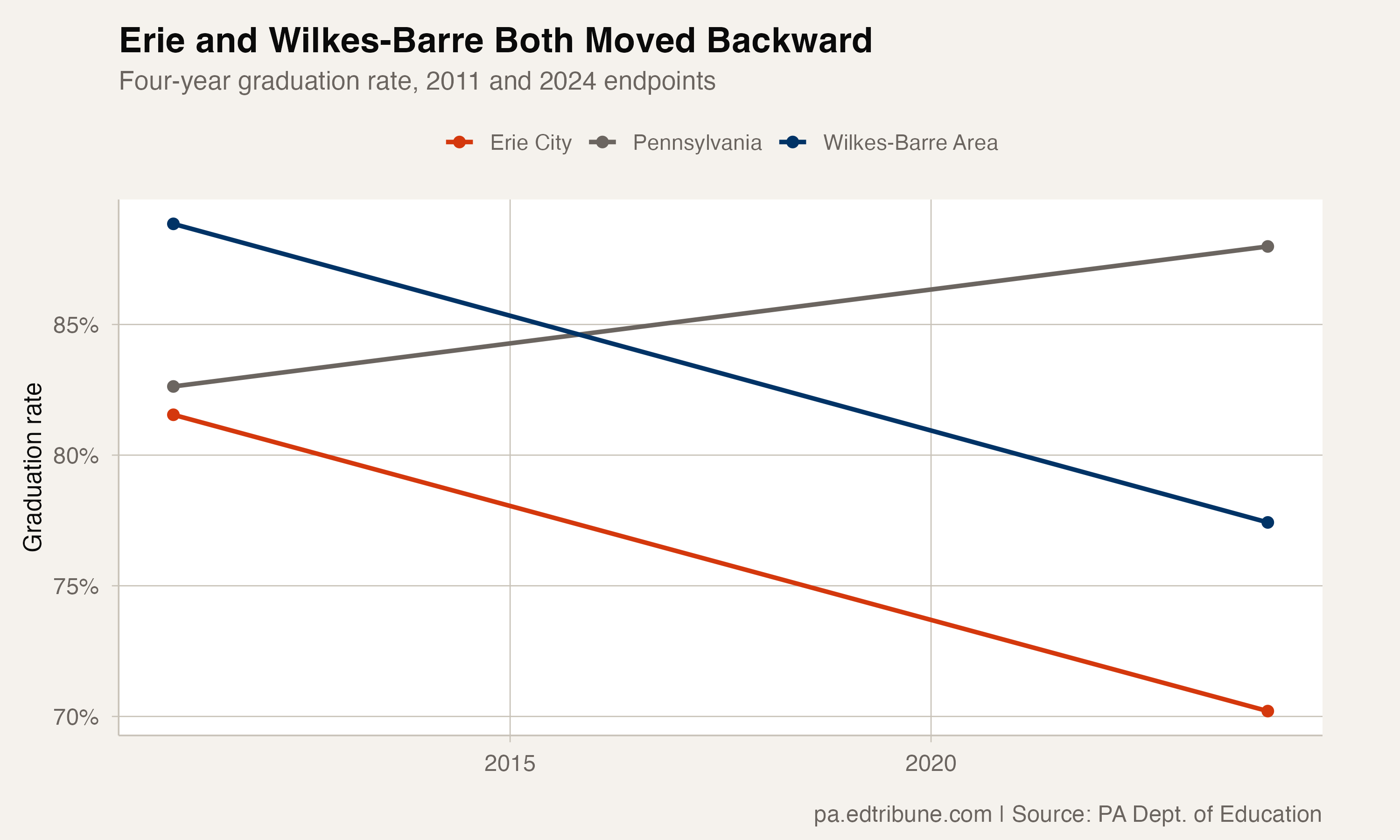
Among 31 traditional districts with a 2024 graduating cohort of at least 600 and comparable endpoint data, 14 declined. Wilkes-Barre Area fell the most: 11.4 percentage points, from 88.9% to 77.4%. Erie fell 11.3 points, from 81.5% to 70.2%.
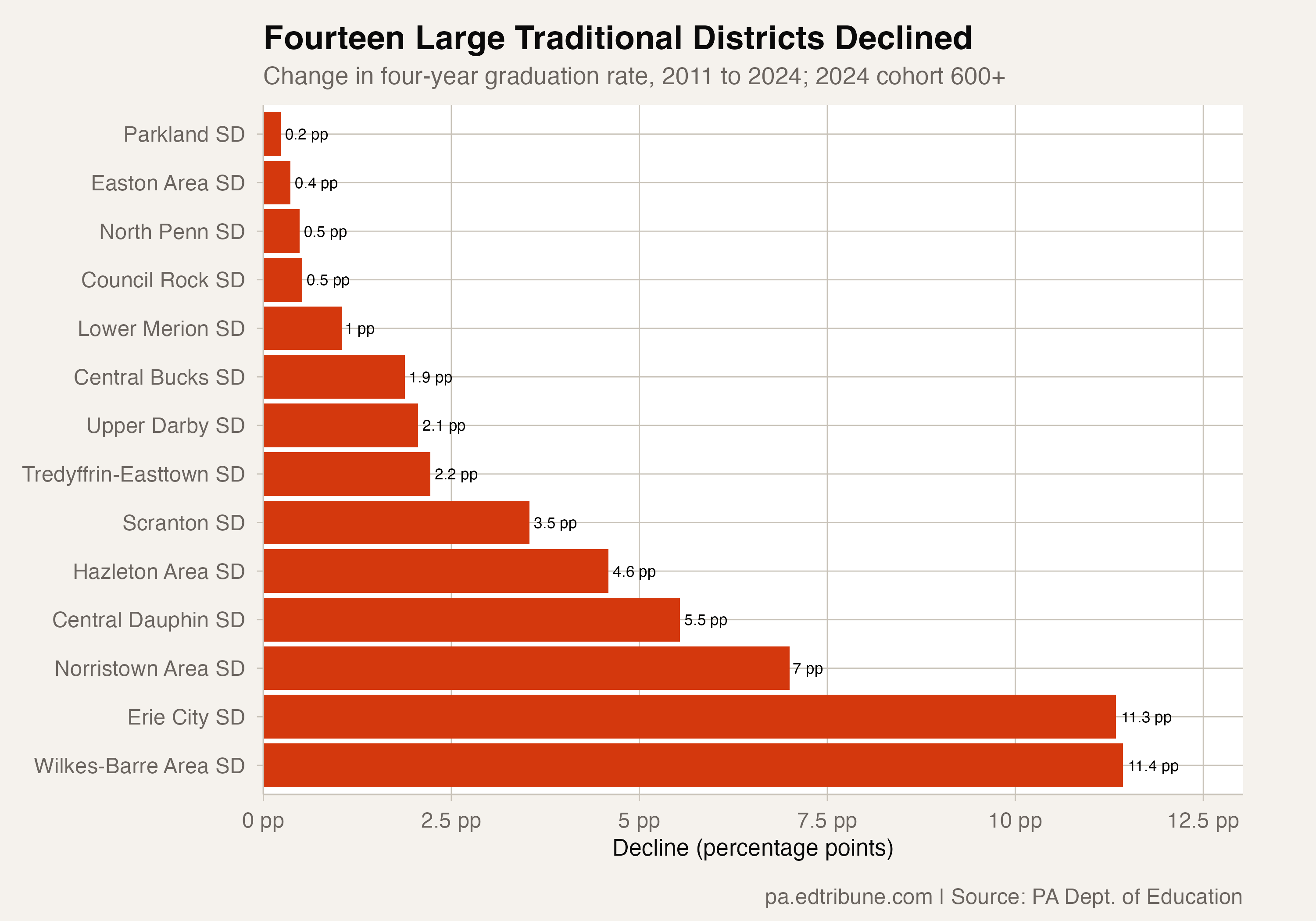
The difference between the two steepest declines was 0.1 percentage point after rounding. The comparison changes the story's shape: Erie is an outlier among large districts, but not a one-district phenomenon.
Erie against the statewide trend
Pennsylvania's statewide four-year graduation rate rose from 82.6% in 2011 to 88.0% in 2024. Erie moved in the opposite direction over the same endpoints.
Erie's graduating cohort was 829 students in 2011 and 735 in 2024. The cohort was smaller at the endpoint, but the graduation-rate decline is calculated from the published rate, not from a category sum or an inferred denominator.
The 14 declining districts were not all alike. Their endpoint changes ranged from Wilkes-Barre Area's 11.4-point decline and Erie's 11.3-point decline to smaller decreases in Parkland, Easton Area and North Penn. The full comparison is in the chart.
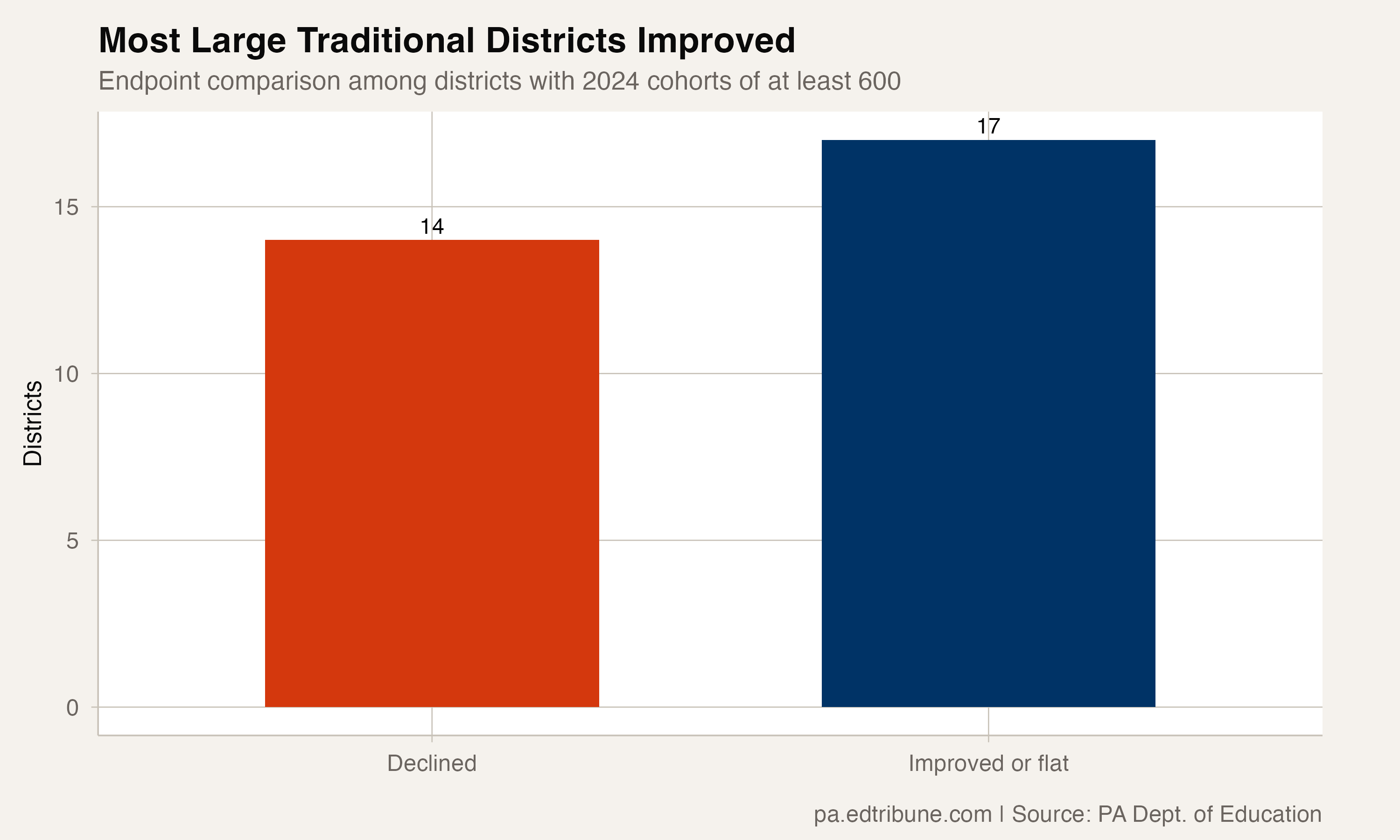
The package data establishes the direction and size of these endpoint changes. It does not establish why any district's rate moved, so this comparison makes no causal claim about Erie, Wilkes-Barre Area or the other districts.
Source
Pennsylvania Department of Education, graduation-rate data.
Detailed code that reproduces the analysis and figures in this article is available exclusively to EdTribune subscribers.
Discussion
Sign in to join the discussion.
Loading comments...